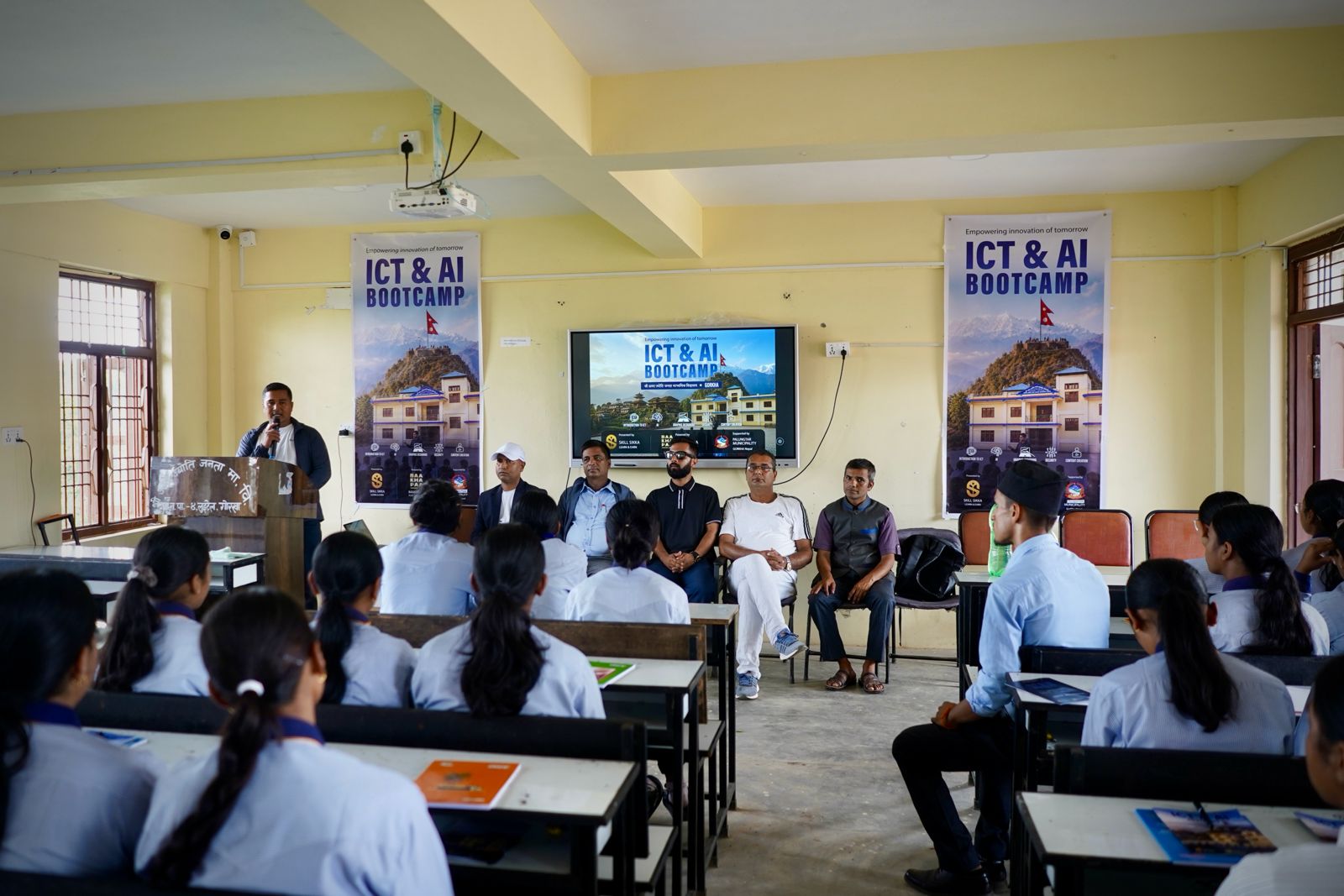
Over four intensive days, students moved beyond simply learning about technology and began experiencing how technology is actually used to understand problems, develop ideas, create digital solutions, and work together as a team.
The program was designed as a progressive learning journey. Students first developed a foundation in digital technology and artificial intelligence, then explored practical AI tools, digital research, creativity, design, and responsible technology use. As the sessions progressed, the focus shifted from learning concepts to applying them through collaborative projects, technical roles, career exploration, and hands-on development.
By the end of the program, students were not only introduced to emerging technologies but were also given an opportunity to experience different roles within a real-world technology workflow.
Day 1: Building a Strong Digital Foundation
The first day focused on helping students understand the digital world around them.
The sessions introduced fundamental concepts of ICT and computing, including how modern technology works, how the internet connects people and systems, the role of servers and cloud platforms, and how social media and algorithms influence everyday digital experiences. Students were also introduced to the concept of Digital Nepal and how technology is becoming increasingly connected to education, communication, business, and everyday life.
The conversation then moved toward Artificial Intelligence. Students explored what AI is, different types of AI, and the basic idea of how AI systems learn. Rather than treating AI as something distant or complicated, the session connected AI with learning, creativity, problem-solving, and practical digital tools. Students were introduced to prompt engineering and encouraged to think about how the quality of their instructions can influence the usefulness of AI-generated results.
An equally important part of Day 1 was responsible technology use. Students discussed digital footprints, online safety, phishing and spam, strong passwords and multi-factor authentication, social media privacy, misinformation, and ethical questions surrounding AI. The goal was not simply to teach students how to use technology, but to help them understand how to use it safely, critically, and responsibly.
The day also introduced the fundamentals of design. Students explored what designing means, how design affects people, the elements that contribute to effective design, and the difference between good and poor design. Through interactive activities, they began looking at digital products not only from a technical perspective but also from the perspective of users and their experiences.
Day 2: Deepening Skills and Turning Ideas Into Solutions
Day 2 built upon the foundation established on the first day and placed greater emphasis on practical digital skills.
Students developed smarter internet and research skills, learning how to search more effectively, identify unreliable or misleading information, and approach digital information critically. Prompt engineering was also taken further, with students exploring advanced prompting techniques, role-based prompting, creativity, and innovation.
The learning then expanded into real-world applications of AI. Students explored AI as a study assistant and looked at applications involving language, organization, machine learning, computer vision, voice AI, recommendation systems, robotics, medicine, agriculture, and Nepal-specific use cases. This helped students understand that AI is not limited to chatbots or content generation; it is already being applied across a wide range of fields.
Students were also introduced to a problem-first approach to innovation. Instead of starting with a technology and asking what could be built with it, they were encouraged to begin with a user group, identify a real problem or pain point, and then think about an appropriate solution.
Through an AI project canvas and lean prototyping activities, including no-code approaches, students learned how an initial idea can gradually become a practical solution. They also practiced presenting their ideas through a concise pitch covering the problem, solution, impact, and the value of the proposed idea. Peer feedback helped students understand how constructive feedback can improve an idea before it becomes a finished product.
Design was also approached from a more practical perspective. Students explored design principles, commonly used design tools, AI-assisted design, and the areas where human creativity and judgment remain important.
By the end of Day 2, students had moved from simply understanding technology to thinking like problem-solvers: identifying a need, developing an idea, testing it through a prototype, receiving feedback, and communicating the solution.
Day 3: From Learning to Building
Day 3 marked an important transition in the program.
Instead of focusing primarily on individual learning, students began working collaboratively on projects. The day was structured around project-based learning, where students were introduced to different stages and responsibilities involved in developing a digital product.
The students were organized into two major learning tracks: a Technical Group and a Career Counselling Group.
Within the technical track, students were exposed to four important areas of a software development team:
- Project Management (PM) – understanding how a project is planned, organized, tracked, and delivered.
- UI/UX Design – understanding users, designing interfaces, creating layouts, and thinking about the overall user experience.
- Frontend & Backend Development – understanding how the visible interface connects with the underlying application logic and data.
- Quality Assurance (QA) – learning the importance of testing, identifying issues, validating functionality, and ensuring that a product works as expected.
The purpose was to help students understand that building software is not simply about writing code. A successful digital product requires planning, design, development, testing, communication, and collaboration between different roles.
Building Two Different Digital Solutions
The most practical part of Day 3 was giving students an opportunity to turn their learning into actual projects.
The technical students formed two project teams, with each team working on a different type of website.
The first team developed a static website focused on Palungtar and its places. The project gave students an opportunity to think about how technology can be used to present information about a local community, its places, and its identity in a simple and accessible digital format.
The second team developed a dynamic Complaint Box System. Unlike a static informational website, this project required students to think about interaction, data, user input, and system functionality. Students experienced how a digital platform can be designed around a real-world problem and used to create a structured way for users to submit and manage complaints.
Working on these two projects also allowed students to see the difference between a static informational platform and a dynamic system designed around user interaction and data.
More importantly, students experienced the software development process rather than simply hearing about it. They had to communicate with teammates, divide responsibilities, make design decisions, think about functionality, identify issues, and work toward a working outcome.
Alongside the technical track, the Career Counselling Group focused on helping students think about their future beyond the immediate classroom experience. This complemented the technical sessions by connecting what students were learning with possible career paths, professional skills, and the different opportunities available within the technology ecosystem.
Day 4: Bringing the Learning Together
The final day served as the opportunity to bring together the learning, practical experience, teamwork, and professional development developed throughout the program.
After three days of exploring technology, AI, design, problem-solving, technical roles, and project development, students had a stronger understanding of how these individual skills connect within a larger digital ecosystem.
The emphasis was no longer only on “What is this technology?” but increasingly on questions such as:
What problem can we solve?
Who are we solving it for?
How should we design the solution?
How can we build it?
How do we test it?
How do we communicate it?
And where can these skills take us in the future?
This progression was an important part of the overall learning experience. Students were encouraged to see technology not simply as a collection of tools, but as a combination of creativity, problem-solving, communication, technical knowledge, teamwork, and responsible decision-making.
More Than a Technology Workshop
What made the four-day program meaningful was the progression from understanding → experimenting → collaborating → building.
Students began by understanding the digital technologies they interact with every day. They then explored AI, digital research, prompting, design, online safety, and problem-solving. The learning gradually became more practical, eventually placing students into collaborative environments where they could experience project management, design, development, and quality assurance.
The two student-built websites on Day 3 represented this transition particularly well. One project demonstrated how students could use technology to document and present their local environment through a static website, while the Complaint Box System demonstrated how they could think about a real-world problem and develop a dynamic digital solution around it.
The experience also helped students understand that there is no single path into technology. Someone may be interested in coding, while another may find their strength in design, project coordination, testing, communication, entrepreneurship, or another area of the digital ecosystem.
Empowering Students to Think, Build, and Explore
The ultimate goal of the program was not to turn students into experts in four days. Instead, it was to give them a strong starting point.
They were introduced to the technologies shaping the modern world, trained to use AI more effectively and responsibly, encouraged to question information, exposed to design and development practices, and given the opportunity to collaborate on real digital projects.
Most importantly, they were encouraged to move from being consumers of technology to potential creators of technology.
The four days demonstrated what can happen when students are given not only knowledge, but also the opportunity to experiment, collaborate, build, receive feedback, and think about how their skills can contribute to the world around them.
From understanding how the internet works to exploring artificial intelligence, from learning design principles to developing websites, and from discussing careers to experiencing software-development roles, the journey was ultimately about one thing:
Helping students see technology not just as something they use, but as something they can understand, create, and use to solve meaningful problems.